
EMG and Nerve Conduction Studies
An EMG test and a nerve conduction study measure how well your muscles and nerves are working, to help find the cause of numbness, tingling, burning, muscle weakness or unexplained pain. Spine & Rehab Specialists provides electrodiagnostic testing in El Paso, Texas, so you and your care team can choose the right treatment plan.
Two tests, one clear picture of your nerves and muscles
An electromyography (EMG) measures the electrical activity of your muscles at rest and during contraction. Nerves control muscles through electrical signals, so abnormal readings can point to nerve injury, muscle dysfunction or a neuromuscular disorder.
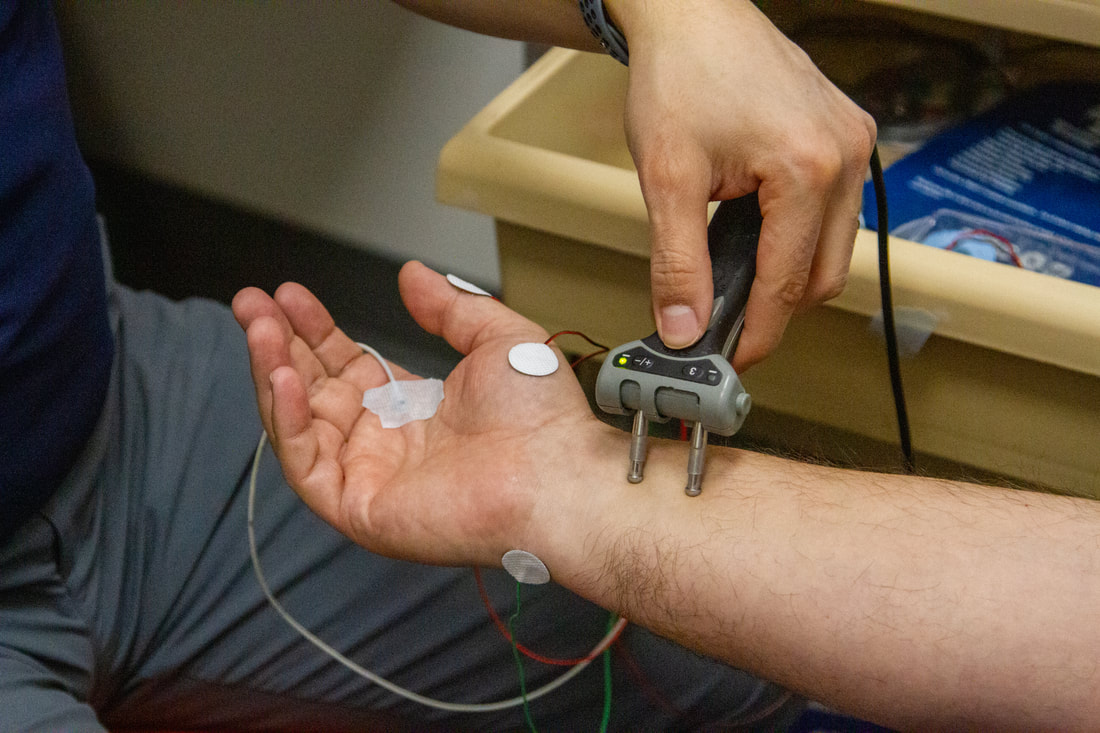
A nerve conduction study applies mild electrical stimulation to the skin over a nerve and measures the response, to show how fast and how strongly the nerve sends signals. Together they give a complete look at your neuromuscular system, and can find problems that do not show up on an MRI or X-ray.
Do I need an EMG test?
You may benefit if you have any of these.
- Persistent numbness or tingling
- Weak grip strength
- Radiating arm or leg pain
- A suspected pinched nerve
- Chronic sciatica
- Unexplained muscle weakness
- Symptoms of peripheral neuropathy
What testing can help identify
The right answer helps decide whether your plan involves physical therapy, orthopedic care or other medical care.
- Neuropathy, including diabetic nerve problems
- Radiculopathy in the neck or low back
- Sciatica
- Carpal tunnel and other nerve compression
- Nerve damage after injury
- Muscle disorders and weakness
Your appointment
The test is done in a comfortable clinical setting by experienced professionals, and it typically takes 30 to 60 minutes.
We explain each step
Our team tells you what will happen before it begins so you feel informed and comfortable.
Nerve conduction
Mild electrical stimulation is applied over the nerve while the response is recorded.
EMG
A small needle electrode may be placed in specific muscles to record their electrical response, with real-time data for analysis.
Results and next steps
We review the results to find the source of your symptoms, and may recommend physical therapy, conservative care, specialist referral or more testing.
Questions about EMG and nerve testing
Is it painful?
Most patients tolerate it well. You may feel mild discomfort during the stimulation or when the small electrode is inserted, and temporary soreness can occur. Serious side effects are rare.
Can it detect carpal tunnel syndrome?
Yes. These studies are commonly used to confirm carpal tunnel syndrome by measuring how the median nerve conducts signals through the wrist, which shows whether compression is present and how severe it may be.
Can it show nerve problems from a herniated disc?
Yes. If a disc is pressing on a nerve root, the studies can confirm whether the nerve is functioning properly, which helps separate spine problems from other nerve disorders.
What causes peripheral nerve damage?
Diabetes, injury, repetitive motion, spinal conditions such as herniated discs, or chronic pressure on nerves.
Who does the testing
Our physical therapists Anthony Durant, PT, DPT, ECS, Cert. MDT, FMSK®, R-EDX® and Raji Soni, PT, DPT hold electrodiagnostic certifications. We coordinate care with your referring physician, give clear explanations, and follow up with you personally. We see patients at both our Edgemere and Physicians clinics.
EMG and nerve conduction studies in El Paso, Texas
Call our Edgemere or Physicians clinic, or request an appointment, and we will find a time to see you in El Paso, Texas.
We see patients at our Edgemere and Physicians clinics in El Paso, Texas.