
Vestibular Rehab / Dizziness & Balance
Vestibular rehabilitation is physical therapy for dizziness, unsteadiness and balance problems that start in the inner ear or the brain. It teaches your brain and inner ear to work together again, and it builds the strength and walking skills that keep you on your feet. Our Edgemere and Physicians clinics treat balance and vestibular problems in El Paso, Texas.
Why you feel dizzy, lightheaded or off balance
Your vestibular system is the set of tiny balance organs in your inner ears and the brain pathways that read them. It tells you which way is up and how your head is moving. When it misreports, you can feel lightheaded, dizzy, unsteady on your feet or like you are feeling off balance, and ordinary tasks such as turning over in bed or walking through a crowded store feel unsafe.
Vestibular therapy starts by working out which part of the system is the problem. Then we choose exercises that retrain it, and we add strength and walking practice so you feel steady in daily life.
Common causes of balance problems we treat
Several problems can look alike from the inside, which is why a hands-on evaluation matters. The three below each have their own page.
Vertigo and BPPV
A spinning feeling set off by head movement. We use repositioning maneuvers to treat it. See vertigo and BPPV.
Dizziness after a head injury
Dizziness, imbalance and motion sensitivity can last after a concussion. See concussion care.
Numb feet and unsteadiness
Nerve damage in the feet takes away the feedback you balance with. See peripheral neuropathy.
What a balance evaluation looks at
Your therapist asks when the dizziness happens, what sets it off and what you have stopped doing because of it. Then we look at how you stand, turn and walk, and how your eyes keep up when your head moves, because the eyes and inner ear share the work of keeping you steady.
Other causes of poor balance matter too: stroke or Parkinson's disease, aging and muscle weakness, vision problems and the side effects of some medications. We share what we find with your doctor, and a plan comes out of it that fits you.
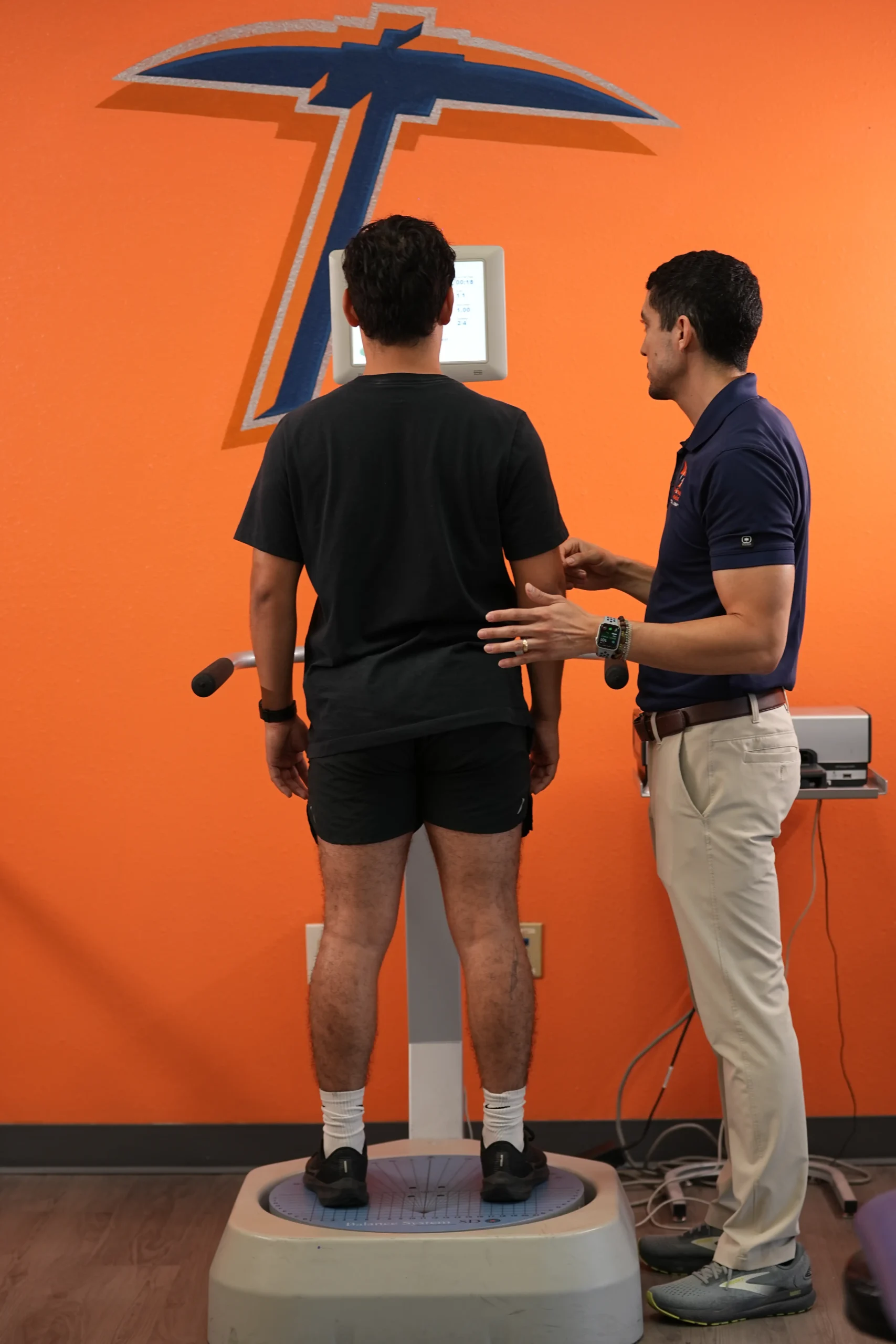
How treatment retrains your balance
Your plan is built around what the evaluation shows. It may include:
- Vestibular rehabilitation exercises that reduce dizziness and improve coordination
- Eye-head coordination exercises (gaze stabilization) that improve focus and reduce motion sensitivity
- Gradual exposure and movement training for people who feel dizzy in cars or crowded places (habituation)
- Balance training and gait training to improve walking and prevent falls
- Strength and flexibility work for posture and movement
- A home program, so you can keep practicing safely between visits
Fear of falling and fall prevention
Many older adults are unsteady because balance slowly declines with age and muscle weakness. A scare or a fall makes people move less, which makes balance worse. Our therapists work on strength, flexibility and confidence so a fear of falling does not shrink your day. The full program is on fall prevention. If you live with Parkinson's disease or have had a Stroke Recovery, balance work is part of that care too.
Go to the emergency room if dizziness comes with warning signs
Dizziness is not always an inner ear problem. Do not wait for an appointment if you have sudden dizziness with:
- Slurred speech or trouble finding words
- A drooping face
- Weakness or numbness in an arm or leg
- A sudden, severe headache
Questions about balance therapy
Do I need a referral for balance therapy near me?
Texas allows direct access to physical therapy, so in many cases you do not need a referral. Call either clinic and we will help verify your insurance requirements.
Will I still feel dizzy while I exercise?
Some exercises are meant to bring on mild, short symptoms so your brain can adapt. Your therapist adjusts how much you do and tells you what to expect.
Can you treat balance problems after a stroke or with Parkinson's?
Yes. Our care for neurological balance issues focuses on strength, coordination and safe movement.
Steadier on your feet in El Paso, Texas
You do not have to live with dizziness or a fear of falling. Call our Edgemere or Physicians clinic, or request an appointment. In many cases you do not need a referral in Texas, and we can help verify your insurance requirements before your first visit.
We see patients at our Edgemere and Physicians clinics in El Paso, Texas.