
Peripheral Neuropathy
Peripheral neuropathy is damage to the nerves outside the brain and spinal cord, and it causes numbness, tingling or burning, usually in both feet first. Physical therapy improves balance, strength, walking and safety, but it usually cannot reverse nerve damage. Our Edgemere and Physicians clinics treat neuropathy in El Paso, Texas, and can test the nerves with EMG when that is needed.
Numb feet, tingling feet and burning feet
Your nerves carry touch, temperature and position signals between your skin and your brain, and they carry commands to your muscles. When they are damaged, the signals fade or scramble, and you notice numb feet, tingling feet or burning feet. Neuropathy in the hands can follow, although it usually starts in the feet.
Diabetic neuropathy is the most common type. The same symptoms can come from chemotherapy (chemo neuropathy), a vitamin B12 deficiency or alcohol, and sometimes from injury, repetitive motion or a pinched nerve at the spine. Your doctor works out the cause, and we work on what neuropathy does to how you move.
Neuropathy and balance: how numb feet raise fall risk
You balance with your eyes, your inner ear and the feel of the ground. Neuropathy dulls the last one.
Less feedback from the ground
Dim rooms and uneven floors get harder, because you rely more on your eyes.
Weak lower legs
Nerve damage can weaken the muscles that steer your ankles, which makes tripping more likely.
The result
Unsteadiness and a fear of falling. See balance and dizziness care and fall prevention.
What physical therapy can do for neuropathy treatment, and what it cannot
We are honest about this. It does not usually reverse nerve damage. It can make you stronger and safer on the nerves you have.
- Balance training and gait training on different surfaces
- Strengthening for the lower legs, ankles and hips
- Fall prevention work and home safety advice
- Direct current neuromuscular re-education to retrain movement patterns, which we use for neuropathy cases when appropriate (see our Neubie page)
- Functional dry needling for the tight muscles that often come with nerve irritation (see dry needling)
When testing helps: EMG and nerve conduction studies
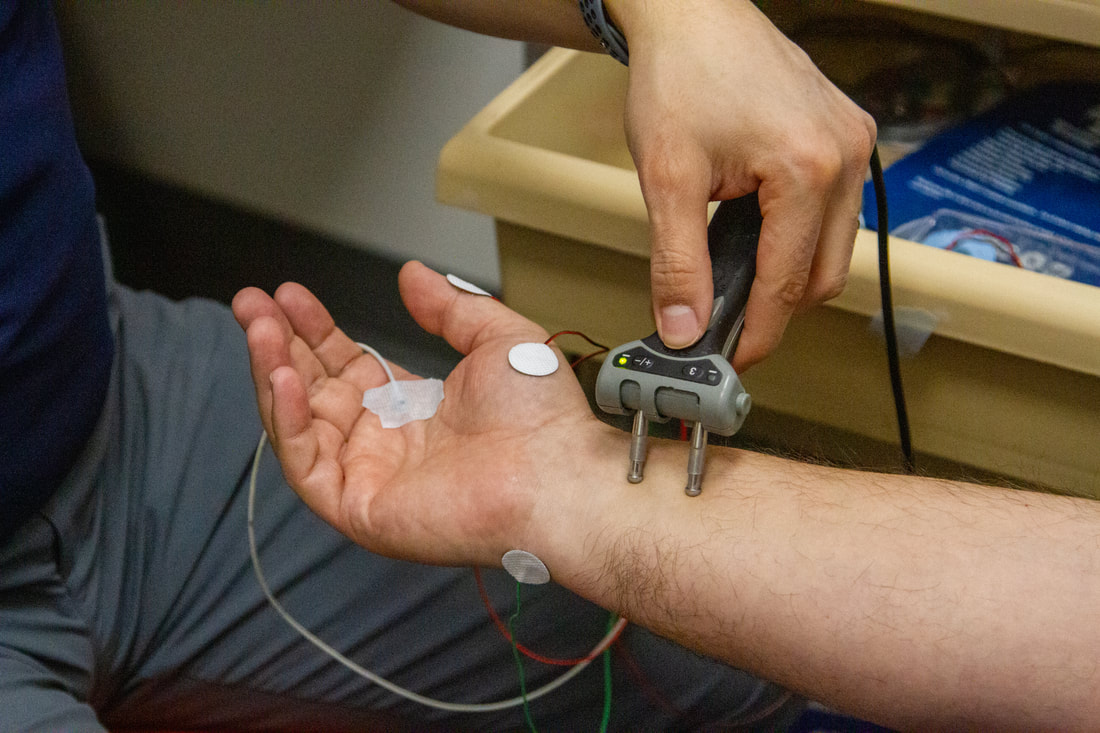
If it is not clear what is causing numbness, weakness or burning, an EMG and nerve conduction study measures how well your nerves and muscles send signals. It can tell neuropathy from a pinched nerve at the neck or low back, or from carpal tunnel syndrome. The results help decide whether physical therapy, a specialist or more testing is the next step.
We perform this testing at our clinics with clinicians trained in electrodiagnosis. Read more on EMG and nerve conduction studies.
Daily foot checks, home safety and working with your doctor
Check your feet every day for cuts, blisters and red spots, because numb feet do not warn you. Wear closed shoes at home, keep rooms lit, and clear loose rugs and cords. We work alongside your doctor or endocrinologist, and blood sugar control is something they manage.
Pain that is only in the joints, heel or tendons of the foot belongs on foot and ankle pain. Numbness that runs down one leg can come from the spine, which we cover on Sciatica. Numbness in the thumb side of the hand may be carpal tunnel syndrome.
Neuropathy care in El Paso, Texas
If numb or burning feet are making you unsteady, call our Edgemere or Physicians clinic, or request an appointment. In many cases you do not need a referral in Texas, and we can help verify your insurance requirements before your first visit.
We see patients at our Edgemere and Physicians clinics in El Paso, Texas.