Shoulder Pain
Shoulder pain can make it hard to reach a shelf, get dressed, lift a bag or sleep on your side. Physical therapy finds what is limiting the shoulder and treats the movement, strength and joint problems behind it. We see shoulder pain at our Edgemere and Physicians clinics in El Paso, Texas.
Common shoulder problems we treat
Rotator cuff tear and tendinitis
The rotator cuff tendons lift and steady your arm. Overuse can cause rotator cuff tendinitis, and an injury can cause a rotator cuff tear. Some tears can be managed with physical therapy, while larger or traumatic tears may need imaging or an orthopedic evaluation.
Shoulder impingement and bursitis
Shoulder impingement and shoulder bursitis cause pain when you reach overhead or lower your arm. Treatment eases stress on the shoulder and improves how the joint moves.
Frozen shoulder
Pain and stiffness that worsen over time. Guided mobility work helps you move the shoulder more comfortably at a safe pace.
Instability and dislocation
After a dislocated shoulder, or with a labral tear that leaves the joint feeling loose, catching or clicking, strength and control work around the joint is the focus.
Arthritis and stiffness
Arthritis can make the joint painful and hard to move. See Arthritis & Joint Pain for more on joint wear.
After shoulder surgery
Therapy after a rotator cuff repair or other surgery follows your surgeon's instructions. Read post-surgical rehab.
Night pain and the arm you can't lift
Pain at night or when lying on one side is common with rotator cuff and bursa problems, and shoulder pain at night is one of the main reasons people come in. If it feels like you can't lift my arm, or you cannot raise it overhead or behind your back, that tells us which tendons and joints to test first.
Because neck problems can also cause pain near the shoulder, we check your neck during the exam. Pain that starts in the neck is covered on Neck Pain.
Seeing the tendon move
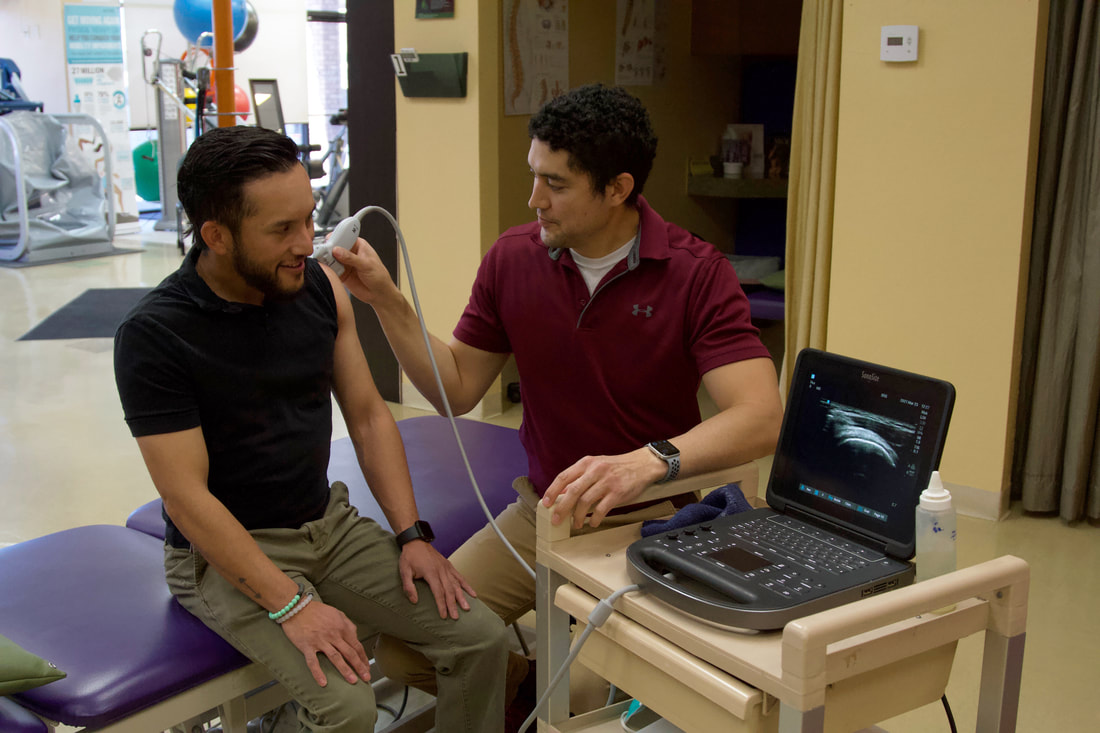
When it will help, ((staff:Rajeshwari (Raji) Soni)) uses musculoskeletal ultrasound to look at the rotator cuff and other soft tissues in real time. The pictures help us pick the right plan and track how the shoulder is healing. She holds credentials in musculoskeletal sonography.
Ultrasound is a tool, not a requirement. You do not always need an MRI before starting treatment, and if the exam suggests imaging or another medical opinion is needed, we will say so.
What treatment looks like
Your first visit is a one-on-one exam of your shoulder and neck: movement, strength, posture and the everyday tasks you cannot do. Care may then include:
- Manual therapy and joint mobilization to improve movement and ease stiffness
- Stretching and mobility exercises
- Rotator cuff and shoulder blade (scapular) strengthening
- Neuromuscular re-education, including neuromuscular stimulation when it fits
- Dry needling when clinically appropriate
- Home exercises and guidance on activity
Shoulder questions
Can physical therapy help a rotator cuff tear?
Some rotator cuff tears can be managed with physical therapy, which may improve strength, motion and function. Larger or traumatic tears may also need imaging or an orthopedic evaluation.
How long does shoulder therapy take?
It depends on the injury, how long you have had symptoms and your goals. Your therapist tracks your progress and adjusts the plan.
Does physical therapy replace my doctor's care?
No. It gives you an active way to work on movement problems that may be adding to your symptoms. Related pages: Elbow Pain (Tennis & Golfer's Elbow) for pain below the shoulder and Sports Injury Rehab for athletes.
Shoulder care in El Paso, Texas
Call or request an appointment at our Edgemere or Physicians clinic, and tell us which movements hurt most.
We see patients at our Edgemere and Physicians clinics in El Paso, Texas.